
WELCOME BONUS 200%
UP TO €1500 + 200
FREE SPINS
UP TO €1500 + 200
FREE SPINS
Home → Blackjack
Blackjack at Ggbet: Variants, Rules and Payouts
Which rule variants does the software show?
Blackjack Insurance is a separate side bet available in games using six to eight decks, where the dealer checks for an Ace. This wager pays 2:1 but increases the house edge to 7.47 percent compared to the base game. Standard basic strategy mandates always declining this insurance unless card counting yields a True Count of plus three or higher.
The presence of Soft 17 rules significantly alters the theoretical return on investment for players. A Dealer Hits Soft 17 policy adds 0.22 percentage points to the house advantage, whereas Resplit Aces reduces it by 0.08 percentage points. Double After Split offers a further reduction of approximately 0.14 percentage points to the casino's edge.
Payout structures define the ultimate cost of play, with some tables offering unfavorable ratios like 6:5 instead of the standard 3:2. Switching from 3:2 to 6:5 payouts on a six-deck game increases the house edge by exactly 1.39 percentage points. For example, a winning ten-euro hand pays twelve euros under 6:5 rules rather than fifteen euros under 3:2 conditions.
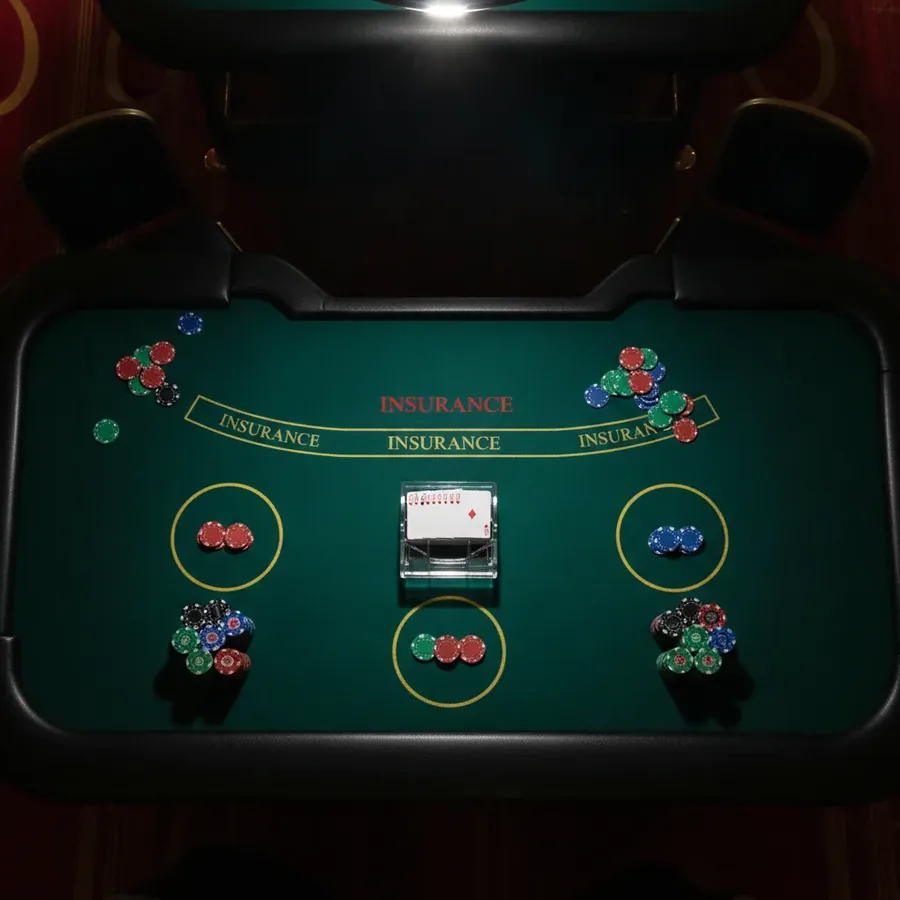
Stand-on-17 Rule and Its Meaning for Players
The Stand-on-17 (S17) rule requires the dealer to stand when holding a soft seventeen, which benefits the player's expected value. This specific configuration contributes to a lower house edge of 0.28 percent in Liberal Vegas Strip games. It stands as one of the most favorable rule combinations alongside double after split and late surrender options.
In contrast, a Dealer Hits Soft 17 (H17) rule shifts the mathematical advantage back toward the house by 0.22 percentage points. This adjustment negates some of the benefits provided by other generous rules like resplitting aces. Players must account for this penalty when calculating their long-term loss rate per hour.
Comparing S17 against H17 reveals that standing on soft seventeen is critical for maintaining optimal return rates. The difference between these two dealer behaviors directly impacts the RTP figures shown in game information panels. Choosing tables with S17 rules helps minimize the statistical disadvantage inherent in blackjack gameplay.
What Peek Means with a Dealer Ace
When the dealer shows an Ace, they typically peek for a natural blackjack before players act on their hands. This procedure protects players from losing their entire original stake if the dealer already holds a twenty-one. It allows for strategic decisions like splitting pairs without risking immediate total loss on non-blackjack hands.
Insurance bets are offered specifically because of this peek mechanism when the dealer displays an Ace upcard. The side bet costs fifty percent of the main wager and pays 2:1 if the dealer has blackjack. However, the house edge on this specific bet remains high at 7.47 percent in multi-deck shoes.
Late Surrender is another mechanic often tied to initial hand evaluation after the dealer's peek. Players may forfeit half their bet if the dealer has not checked for blackjack yet. This option improves the overall RTP by approximately 0.08 percentage points, providing a slight safety net against strong dealer upcards.
Bonus 100 EUR with 10 percent credit
Table games contribute only ten percent toward the wagering requirements of the 300 percent welcome bonus up to two thousand euros. Depositing one hundred euros generates a three hundred euro bonus, requiring four thousand euros in turnover to clear. Playing blackjack with this balance means each bet only counts as ten percent of its face value.
A one hundred euro deposit results in a maximum bonus of three hundred euros due to the three hundred percent match cap. To unlock these funds, players must generate turnover equal to forty times the bonus amount. This creates a total wagering obligation of twelve thousand euros before any withdrawal is permitted.
Slots count fully toward this requirement, while table games lag significantly behind in progress tracking. Contributing ten percent means a ten euro bet on Lightning Blackjack only advances the clearance by one euro. Players seeking faster bonus release should prioritize slot machines over live dealer tables like Infinite Blackjack.
Ignored Basic Strategy Chart: 1 Percent Wasted
Deviation from optimal basic strategy can increase the house edge by roughly one percentage point in standard games. On a six-deck table paying 3:2, this error raises the advantage from 0.46 percent to approximately 1.46 percent. Such mistakes effectively double the casino's expected profit margin on every hand dealt.
Proper play on Liberal Vegas Strip rules limits the house edge to just 0.28 percent when executed correctly. Ignoring charts here wastes potential savings that could otherwise preserve bankroll over extended sessions. The difference between perfect play and average play represents a significant long-term financial drain.
Side bets like Any Pair or Hot 3 in Evolution's Infinite Blackjack offer poor odds independent of main game strategy. These wagers often carry house edges exceeding five percent regardless of how well the main hand is played. Relying on intuition rather than mathematical charts ensures suboptimal returns on both primary and secondary bets.
Blackjack variants at a glance
| Variant | Payout | House edge | Rule | Bet range |
|---|---|---|---|---|
| Blackjack 6 Decks, S17, DAS, DOA, Auszahlung 3:2, Basisstrategie | 99.54% | 0.46% | Dealer steht auf Soft 17; Verdopplung auf jeder Zweierkarte; Verdopplung nach Split erlaubt; keine Aufgabe. Basisstrategie ist für diesen Wert zwingend | Blackjack 3:2, normaler Gewinn 1:1, Insurance 2:1 |
| Blackjack Surrender (Late Surrender) – Regel-Effekt | n.a. (Regel-Modifikator) | −0.08 Prozentpunkte | Spieler gibt Hand nach Dealer-Blackjack-Prüfung auf, verliert die Hälfte des Einsatzes. Verbessert RTP um ca. 0.08 Prozentpunkte. Early Surrender ist wesentlich wertvoller (bis −0.6 Prozentpunkte), aber extrem selten. | Rückzahlung 50% des Einsatzes |
| Blackjack Liberal Vegas Strip (liberale Regeln, 3:2) | 99.72% | 0.28% | Günstigste Regelkombination: S17 + DAS + Resplit + Late Surrender. Standardabweichung 1,15 | Blackjack 3:2, Gewinn 1:1 |
| Blackjack Split / Double / H17 – Regel-Effekte | n.a. (Regel-Modifikatoren) | H17 +0.22 Prozentpunkte; RSA −0.08 Prozentpunkte; DAS −0.14 Prozentpunkte | Dealer Hits Soft 17 verschlechtert RTP um 0.22 Prozentpunkte; Resplit Aces verbessert um 0.08 Prozentpunkte; Double After Split verbessert um ca. 0.14 Prozentpunkte; 6 Decks statt 8 – ca. 0.02 Prozentpunkte. | Double – Einsatz ×2 mit einer Karte; Split – bis 4 Hände; Ass-Split meist mit einer Karte. |
| Blackjack Auszahlung 6:5 statt 3:2 (6 Decks) | 98.15% | 1.85% | Ersatz von 3:2 durch 6:5 fügt exakt +1.39 Prozentpunkte zum Vorteil des Casinos hinzu – stärker als jede andere Regeländerung. Bei $10 Einsatz zahlt Blackjack $12 statt $15. | Blackjack 6:5, Gewinn 1:1 |
| Blackjack Insurance / Versicherung (6–8 Decks) | 92.53% | 7.47% | Separate Nebenwette bis 50% der Hauptwette, wenn der Dealer ein Ass hat. Basisstrategie schreibt IMMER Ablehnung vor (außer Karten zählen bei True Count ≥ +3). Bei einem Deck Vorteil ≈ 5.88% | Insurance 2:1 |
Splitting costs double bet: plan budget
Splitting creates a second wager equal to the original stake, effectively doubling the exposure for that specific hand. This rule applies universally across all blackjack variants including Lightning Blackjack and Infinite Blackjack, requiring players to have sufficient funds for multiple simultaneous bets. Consequently, a 10 EUR initial bet requires an additional 10 EUR in the chip tray before the dealer deals the split cards. Players must verify their bankroll covers these potential doubled exposures before initiating any split action during gameplay.
The maximum betting limit of 5,000 EUR at Infinite Blackjack sets the upper boundary for single-hand exposure before splitting occurs. When splitting, the total table commitment rises immediately, potentially reaching 10,000 EUR if the player splits a high-value pair like tens. This structural constraint demands careful budget management, as standard limits do not account for the multiplied stakes inherent in split scenarios. Responsible gambling tools should track these cumulative outflows to prevent exceeding daily deposit caps or personal spending thresholds.
Resplitting Aces improves the RTP by 0.08 percentage points compared to games forbidding this action, offering a slight mathematical advantage. However, most casinos restrict resplitting to only one card per ace, limiting the potential recovery of lost value through additional hands. This restriction means players cannot infinitely expand their position even when holding weak pairs initially dealt. Understanding this limitation helps set realistic expectations for long-term returns when utilizing aggressive splitting strategies against the house edge.
Double Down vs Simple Hit on 11
Double Down allows players to double their initial wager in exchange for receiving exactly one additional card, maximizing profit potential on strong starting totals. On an 11, hitting normally yields an average return of roughly 54 percent, whereas doubling captures the full upside of drawing a ten-value card. The game rules permit doubling after splitting, which further enhances the strategic depth available to disciplined players using basic strategy charts. This option transforms a modest gain into a significantly larger payout when the statistical probability favors the player heavily.
Infinite Blackjack offers a betting range up to 5,000 EUR, making the Double Down feature particularly lucrative for high-rollers seeking amplified returns. Doubling a 5,000 EUR bet risks 10,000 EUR total exposure but promises a 10,000 EUR win upon drawing a favorable card. This binary outcome structure eliminates the variance associated with hitting multiple cards, providing a cleaner risk-reward profile for experienced gamblers. The strict one-card rule ensures the house retains its edge while still rewarding correct strategic decisions made by the participant.
Lightning Blackjack introduces multipliers up to 25x on winning hands, altering the traditional calculus of doubling down on an 11. A successful double might trigger a lightning multiplier, turning a standard 1:1 payout into a much larger sum instantly. This random element adds volatility to what is otherwise a mathematically sound play, potentially rewarding aggressive doubling more than conservative hitting. Players must weigh the certainty of a doubled base bet against the unpredictable nature of these bonus enhancements during live sessions.
Surrender options are unavailable during a Double Down maneuver, forcing players to commit fully to the single-card draw without exit clauses. Late Surrender typically reduces the house edge by 0.08 percentage points, but its absence during doubles removes this safety net entirely. Consequently, the decision rests solely on the probability of improving the hand without recourse to partial loss mitigation. This rigidity emphasizes the importance of precise card counting or basic strategy adherence when opting for the doubled wager.
What Push Means: Stake Returns to You
A Push occurs when the player and dealer finish with identical hand values, resulting in the immediate return of the original wager without loss or gain. This outcome is standard in all blackjack variants, including Liberal Vegas Strip and classic single-deck games, ensuring fair settlement on tied totals. The house edge calculations inherently account for pushes, as they neutralize both wins and losses for that specific round of play. Understanding this mechanic prevents misinterpretation of zero-profit outcomes as failed attempts rather than statistically expected events in the game flow.
Insurance bets pay 2:1 if the dealer has a blackjack, but they lose when the dealer does not, creating a separate push-like scenario for non-blackjack hands. If the dealer shows an ace and does not hold blackjack, the insurance wager loses while the main hand may still push or win independently. This separation means players can experience a push on the primary bet while simultaneously losing the side wager placed for protection. Such disjointed results highlight the complexity of managing multiple concurrent bets within a single dealing sequence.
Lightning Blackjack modifies push dynamics by applying multipliers to winning hands, though pushes remain unaffected by these random bonuses entirely. A pushed hand yields exactly the stake back, regardless of whether a lightning card was active during that deal. This consistency preserves the fundamental fairness of the base game while allowing other outcomes to generate exceptional payouts. Players relying on bonus features must recognize that ties do not benefit from the extra multiplier mechanics available elsewhere.
Infinite Blackjack allows unlimited seats, meaning multiple players might push simultaneously against the dealer, increasing the frequency of neutral outcomes. High traffic tables naturally produce more pushes due to the larger sample size of dealt hands per hour compared to low-volume tables. This statistical reality means players should anticipate more break-even rounds during peak hours than during off-peak periods. Managing expectations around these frequent zero-sum interactions helps maintain emotional stability during extended playing sessions.
RNG draws cards from virtual eight-deck shoe
Random Number Generators simulate an eight-deck shoe for digital blackjack variants, shuffling virtually after each hand to ensure independent outcomes. This mechanism replaces physical cards, guaranteeing that no memory exists between rounds and preventing card counting strategies from gaining an edge. The theoretical return varies slightly based on rule sets, such as the 99.85 percent RTP for single-deck versus 99.54 percent for six-deck versions. These percentages reflect long-term averages over millions of simulated hands, not guarantees for short-term session results.
Live dealer games like Infinite Blackjack use real physical shoes managed by human croupiers, contrasting sharply with the RNG-driven virtual tables. While RNGs offer speed and continuous play, live dealers provide transparency through visible card handling and physical shuffling devices. The betting limits differ significantly, with Infinite Blackjack supporting wagers up to 5,000 EUR compared to lower limits on many RNG tables. This distinction caters to different player preferences regarding authenticity, speed, and maximum stake capacity during gameplay.
Liberal Vegas Strip rules yield a 99.72 percent RTP, benefiting from favorable conditions like soft 17 standing and double after split allowances. These rule variations directly impact the house edge, lowering it to just 0.28 percent compared to stricter variants found elsewhere. Players choosing RNG games should verify which specific rule set applies, as even minor changes can alter the long-term expectancy significantly. Understanding these parameters allows for more informed selection among the various digital blackjack offerings available on the platform.
Blackjack Party features two moderators creating a lively atmosphere, yet the underlying card distribution remains governed by standard RNG algorithms behind the scenes. Despite the entertainment focus, the mathematical foundation mirrors other Evolution Gaming titles, ensuring consistent return profiles across the provider's portfolio. The presence of hosts does not influence the randomness or fairness of the card dealing process in any measurable way. Participants should evaluate the game primarily on its structural RTP and rule advantages rather than the thematic presentation elements.
Insurance Pays 2:1 Yet Still Costs Money
Insurance is a side bet costing half the original wager, paying 2:1 if the dealer holds a natural blackjack. This proposition is available when the dealer's upcard is an ace, offering protection against the primary hand losing to a dealer twenty-one. However, the house edge on this bet stands at approximately 7.47 percent for six to eight decks, making it highly unfavorable mathematically. Basic strategy dictates rejecting this option unless the player possesses a significant count advantage exceeding plus three in true count terms.
Lightning Blackjack includes Insurance as one of four side bets, alongside Any Pair, 21+3, and Hot 3, expanding the betting landscape beyond core gameplay. While the main game maintains a 99.56 percent RTP, adding Insurance drastically reduces the overall expected return due to its steep house advantage. Players engaging in this variant must carefully balance their desire for protection against the statistical likelihood of long-term erosion from this specific wager. The temptation of easy 2:1 payouts often obscures the underlying negative expectation inherent in the side bet structure.
Infinite Blackjack allows up to five thousand euros in bets, meaning an Insurance wager could reach two thousand five hundred euros on a single hand. This massive exposure amplifies the potential loss if the dealer does not hold blackjack, draining the bankroll rapidly despite the attractive payout ratio. The sheer scale of possible stakes makes the poor odds of Insurance even more dangerous for high-limit players seeking to mitigate risk. Disciplined players avoid this side bet entirely, recognizing that the mathematical disadvantage outweighs any perceived safety provided by the coverage.
Early Surrender is far more valuable than Insurance, reducing the house edge by up to 0.6 percent compared to the 7.47 percent cost of Insurance. Since Early Surrender is extremely rare, players frequently encounter Insurance instead, which serves as a less effective alternative for loss mitigation. Understanding this disparity helps players make better decisions when facing dealer aces, preferring surrender options whenever available over costly insurance wagers. This knowledge supports more efficient bankroll management by avoiding bets with disproportionately high house edges relative to their protective utility.
What a Natural Blackjack Practically Pays Out
A natural blackjack payout of 3:2 returns 150 EUR on a 100 EUR wager, establishing the baseline for optimal return rates in standard games. This generous ratio contrasts sharply with the 6:5 variant, which reduces the payout to 120 EUR and adds exactly 1.39 percentage points to the house edge. Players selecting tables with the inferior 6:5 rule effectively sacrifice significant long-term value compared to those finding 3:2 payouts.
The Liberal Vegas Strip ruleset achieves a superior RTP of 99.72% by combining S17, DAS, resplitting, and late surrender options. This configuration lowers the house advantage to just 0.28%, making it one of the most player-friendly environments available online. In contrast, standard 6-deck games with S17 and DAS but no surrender carry a higher house edge of 0.46% despite identical base rules.
Single-deck games with classic rules offer an impressive RTP of 99.85% and a minimal house edge of only 0.15%. However, many operators compensate for this mathematical advantage by enforcing the restrictive 6:5 payout structure instead of the traditional 3:2. Without the 6:5 penalty, a single-deck game would provide the highest theoretical return among all listed blackjack variants.
Perfect Pairs vs 21+3 in House Edge
The 21+3 side bet in Infinite Blackjack allows wagers up to 5,000 EUR while offering an RTP of 99.47% on the main game total. This Evolution title includes four distinct side bets including Any Pair, Hot 3, and Bust It alongside the standard 21+3 mechanic. The high betting limits cater to players seeking substantial volatility within the live dealer ecosystem.
Lightning Blackjack presents a different risk profile with multipliers reaching up to 25x on winning hands, maintaining an RTP of 99.56%. The table accommodates unlimited players with stakes ranging from 1 to 2,500 EUR, focusing on dramatic payout moments rather than steady side bet accumulation. These lightning features alter the variance significantly compared to standard table offerings.
Side bets generally contribute minimally to bonus turnover requirements, often matching the 10% contribution rate of main table games. Unlike slots which count 100%, these auxiliary wagers require ten times more turnover to clear bonus funds effectively. Players relying on side bets like Perfect Pairs or 21+3 must account for this reduced efficiency when planning their bonus usage strategy.
Blackjack doesn't count for every bonus offer
Tischspiele contribute only 10% toward the wagering requirement of the 300% welcome bonus up to €2,000 plus 100 free spins. This low contribution rate means that playing blackjack requires ten times the turnover volume compared to slot machines which contribute 100%. A 1,000 EUR bonus therefore demands 10,000 EUR in blackjack bets versus just 1,000 EUR in slots to meet clearance conditions.
The 100 free spins attached to the welcome package operate independently of the main deposit match but still face specific playthrough rules. While slots fully satisfy the wagering obligation, any winnings generated from these spins may be subject to separate restrictions or capped at specific amounts. Understanding this distinction prevents confusion between the bonus cash and spin-derived profits.
Insurance bets in blackjack further complicate bonus clearing due to their negative expected value and separate classification as side wagers. With a house edge of 7.47% on insurance using 6-8 decks, placing this bet accelerates bankroll depletion without contributing efficiently to turnover. Base strategy dictates always rejecting insurance unless counting cards at a true count of +3 or higher.
What Hole Card Means at a Live Table
Late surrender rules allow players to forfeit half their bet after the dealer checks for blackjack, improving RTP by approximately 0.08 percentage points. This rule applies only when the dealer does not hold an ace or ten-value card initially, protecting the player from immediate loss on strong dealer hands. Early surrender is rarer but offers greater value by reducing the house edge by up to 0.6 percentage points.
Resplitting aces enhances player flexibility by allowing additional draws on split aces, though most tables restrict this to a single card per hand. This rule improves the RTP by 0.08 percentage points compared to games prohibiting further actions on split aces. Combined with double after split, which adds another 0.14 percentage points, these liberal rules significantly favor the participant.
Dealer hitting soft 17 negatively impacts the game by increasing the house edge by 0.22 percentage points compared to standing on all 17s. This single rule change can erode the advantage gained from other favorable conditions like fewer decks or surrender options. Players should prioritize tables where the dealer stands on soft 17 to maintain optimal mathematical expectations.
Statistics display saves the last 100 rounds
Infinite Blackjack statistics track the last 100 rounds to help players monitor short-term trends and variance patterns at the table. This data covers outcomes for both the main game and the four available side bets including Any Pair and Hot 3. Access to this history allows for informed decisions regarding bet sizing and side wager placement during active sessions.
Lightning Blackjack provides similar statistical tracking but emphasizes the frequency and magnitude of applied multipliers up to 25x. The interface displays recent results to indicate whether high-paying combinations are occurring within the saved round window. This visibility helps players gauge the current state of luck distribution without influencing the random number generator.
Party-themed tables like Blackjack Party focus on entertainment value with two moderators managing the atmosphere rather than deep statistical analysis. While basic round history remains visible, the primary appeal lies in the social interaction and festive environment created by the hosts. Players seeking pure data analytics might find standard Evolution titles more suitable for detailed review.
Contact
Live - online chat
Banking









Providers












ggbet 2025